Launched on the International Day of Co-operatives on 2 July 2016, the platform enables co-ops to learn about the UN’s Sustainable Development Goals (SDGs), make pledges to help achieve them, and track their progress.
The report highlights the contributions of co-ops in the key areas of action identified under the SDGs. One of these is eradicating poverty.
The report gives the example of Coopermondo, the development NGO of the Confederation of Italian Co-operatives (Confcooperative), which has pledged by 2020 to facilitate at least 10 new co-ops led by youth, women, or indigenous people in developing countries. Coopermondo is well on the way to achieving this, with two projects in Togo and Sierra Leone, plus a network of 113 projects in 42 countries carried out itself or by its associate co-ops.
In Canada, Vancity credit union is the country’s largest private-sector Living Wage employer. As its Co-ops for 2030 pledge, Vancity commits to maintaining this living wage and to advocate for other employers in its service area to join the campaign.
Advertisement
Another SDG is ending hunger, relevant to the sector with Alliance figures showing that 32% of all co-ops in the world operate in food and agriculture.
Japanese co-op JA Fukushima Mirai will increase by 2020 agricultural production in the region to levels higher than those before the Great East Japan earthquake, recovering farmland which had been contaminated by radioactivity.
The UN is working towards a series of Sustainable Development Goals
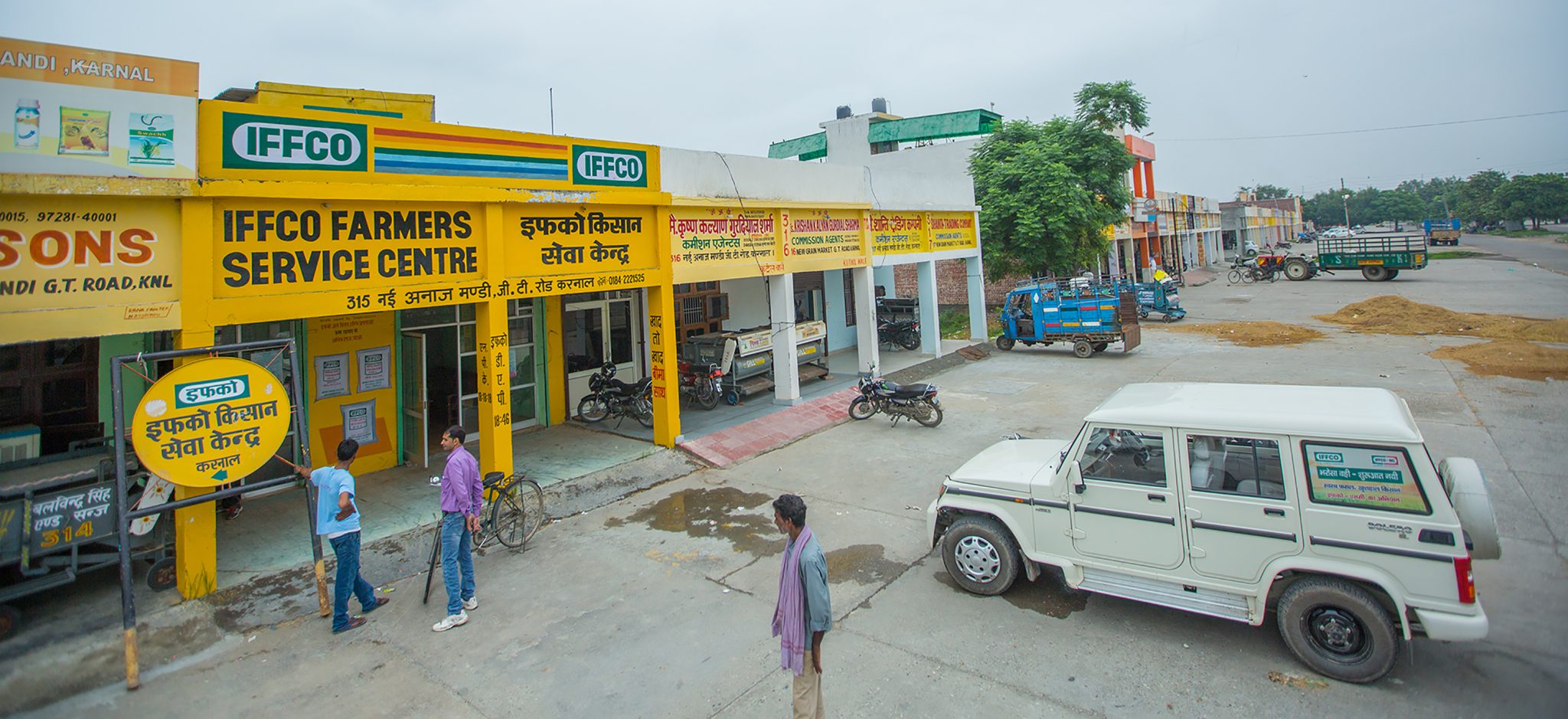
In India IFFCO, a fertiliser co-operative federation, pledged to achieve self-sufficiency in food production by making available high-quality fertilisers at the right time and in appropriate quantities throughout the co-operative network.
Similarly, the Rungeto Farmers Co-operative Society in Kenya commits to double its members’ coffee production and sales by 2030 and to increase milk production and income by 70%.
Ensuring healthy lives is another SDG, and health co-ops are important sources of preventative and curative care around the world, providing everything from home care services to full-service hospitals.
Italian energy co-operative Centoraggi pledges to reduce the neonatal mortality rate by developing initiatives by 2030 that will enable the supply of electricity, through renewable energies, to power maternity wards and general healthcare. This initiative is targeted at solar energy projects in Madagascar, Kenya, Ghana, Angola, and other countries, like Brazil, where Centoraggi hopes to expand.
The Mutuelle de Santé Tujenge Afya Yetu in the Democractic Republic pledges to introduce universal healthcare to its members, improving access to care by 50% for the Congolese population through education and creating new mutuals throughout the country.
Providing inclusive and quality education is another SDG; it is also on the co-operative agenda as one of the movement’s seven principles.
Italian social co-operative Copat, which links students to professional opportunities, pledges to increase children’s access to educational activities to learn about cultural heritage and the role of museums as educators. One programme allows children to create eco-friendly art from materials from the Remida Creative Recycling Centre in Turin.
IFFCO, which serves nearly 40 million farmers, is aiming for self-sufficiency in food production
In India the co-operative Rajiv Gandhi Arts and Science College has committed to educating rural degree students about the co-op model and principles, in the hope that these students will create their own economic opportunities by establishing co-operatives.
On the issue of gender equality and women’s empowerment, Co-operatives UK, the national apex organisation representing co-operatives in the UK, has pledged by 2020 to work with its members to achieve the goals of the Co-operative Women’s Challenge, a campaign to see women fairly represented at all levels of the British co-op movement. The goals include fair representation in democratic structures, more women in senior management roles, and gender equality.
Likewise, IFFCO is supporting women’s economic participation in India, promoting self-help groups for women and offering training in beekeeping, tailoring, embroidery, adult education, fruit and vegetable preservation and computer literacy.
The world’s co-ops are also helping with the SDGs by providing decent work as people-centred enterprises.
Femmes CoopCongo in the Democratic Republic of the Congo aims to integrate 20% more women into the national economy through entrepreneurship by 2030.
National Co-operative Federation and Development in the Philippines pledges to enhance the entrepreneurial capacities of its members through gender-sensitive trainings that cover management, finance, marketing, and technical aspects of business.
In Kenya, CIC Insurance Group has pledged initiatives to help young people, such as supporting the secondary education of 10 students from disadvantaged backgrounds.
The report shows how co-ops contribute to other goals, such as providing affordable electricity and clean water; building a resilient infrastructure; inclusive and sustainable industrialisation; reducing inequalities; sustainable cities and communities; sustainable consumption and production; acting on climate change; protecting water and land; promoting peace, justice and strong institutions; and fostering partnerships.
Inclusion: Theme of the 2017 International Day of Co-operatives
Co-operators around the world will celebrate the theme of inclusion on 1 July 2017 during the United Nations International Day of Co-operatives.
"Co-operatives ensure no one is left behind", is the slogan of the 2017 International Day of Co-operatives.
The theme was selected by the Committee for the Promotion and Advancement of Co-operatives (COPAC), which the Alliance currently chairs.
Inclusion not only captures the people-focused nature of co-operative enterprises, but also echoes the co-operative principles of voluntary and open membership, democratic member control and member economic participation. Co-operatives provide a space where all people, regardless of race, gender, culture, social background or economic circumstance, can meet their needs and build better communities.
COPAC will organise the celebration of the International Day of Co-operatives at the United Nations in mid-July during the High-level Political Forum for Sustainable Development, during which governments and UN officials will convene to review implementation of the Sustainable Development Goals (SDGs). Should you be interested in attending the UN celebration, please contact Fran McCrae at mccrae@ica.coop.
Stay tuned for information about how to celebrate the International Day and tools for your co-operative. You can also learn about past International Days at www.coopsday.coop
Two million UK users would consider investing in Twitter as a co-op
With the proposal to turn Twitter into a user owned co-operative on the agenda at Twitter’s AGM on Monday (22 May), new research suggests that in the UK alone nearly 2 million people, 14% of active Twitter users, would consider investing in a user-owned Twitter if it were to become a co-op, as reported in City A.M today.The future of one of the world’s leading social networks has been the subject of speculation for over a year. Twitter’s viability as a business depends on finding new income streams from its users, yet its users expect a no-cost service with minimal advertising. Big questions about the business’s future are hovering as the company’s shareholders gather for the social network’s AGM in San Francisco next week.On the formal agenda is the proposal, item four of just five, to look at preserving Twitter’s reach and popularity by converting it into a user owned co-op where it is the people who use the social network who own and direct what it does.The proposal came from a handful of minority of shareholders, but the idea has gathered momentum in recent weeks, with a number of shareholders and activists backing it. The UK-based activist investor group Share Action has circulated a briefing to leading ethical investment funds.The UK has 14 million active Twitter users. A poll just conducted by YouGov on behalf of Co-operatives UK, the network for the country’s thousands of co-ops, found that 14% of them, 1.96 million Twitter users, would consider investing in the social network if it were to become a co-op.
Ed Mayo, Secretary General of Co-operatives UK, says:“Twitter is one of a new generation of businesses which do something that goes beyond the market. What future do we want for it? Do we want to try to find ways monetise Twitter in order to provide a return for shareholders? Or do we want to find a way to preserve what its users love? “That Twitter ought to be a user owned co-op is a neat solution. It will give the platform a network of millions of people who can invest small sums to create a viable business offer. And it will give the people who use it the say over the big issues - how it deals with issues like abuse and extremism, what levels of advertising are acceptable, and what ultimately it does to remain sustainable.”
“Our guidance for Twitter investors, in particular the Socially Responsible Investment funds is to back Proposal 4 to promote a visionary new model of co-operative ownership for Twitter.” Catherine Howarth, Chief Executive of ShareAction
World's top 300 co-operatives increase turnover to $2.53 trillion
The world’s largest 300 co-operatives and mutuals have grown their turnover by 7.20 per cent to USD $2.53tn according to the 2016 edition of theWorld Co-operative Monitor(WCM).Presented at the International Summit of Cooperatives in Quebec, The Monitor remains the only project of its kind, collecting and analysing data on the world’s largest co-operative and mutual organisations and otherenterprises controlled by co-operatives.
Charles Gould, Director General of the International Co-operative Alliance, said: "The World Co-operative Monitor is now in its fifth year. There is no more appropriate way to celebrate this, than the seven per cent growth figure which we are proudly to announcing this year, and there is no better time than now, during the 2016 International Summit of Co-operatives."There is a growing interest for co-operatives worldwide and we need to respond to this interest with adequate promotion of our model. The World Co-operative Monitor, as the leading data source on the world’s largest co-operatives and mutuals, is a central instrument for awareness raising, policy-making, advocacy and research."Six UK organisation make the top 300. These are John Lewis Partnership (32), The Co-operative Group (35), Royal London (74), LV (123), NFU Mutual (212), Midcounties Co-operative (241) and Central England Co-operative (274). Danish farming co-operative Arla Foods, which enjoys a significant UK arm, is 47th.View the full list here.The Monitor refers to data from 2014, collected from various sources, such as national rankings, sector rankings, existing databases containing financial data, annual reports and questionnaires. In total, 146 questionnaires were completed from organisations in 39 countries, including individual co-operative and co-operative federal bodies. The database for this edition contains information on 2,370 co-operatives from 63 countries. Of these, 1420 co-operatives from across 52 countries have a turnover exceeding USD $100m.The top five co-operatives by turnover are: Crédit Agricole (USD $90.21bn), a network of co-operative banks from France; BVR (USD $70.05bn), Germany’s national association of co-operative banks; Groupe BPCE (USD 68.96bn), also a network of co-operative banks from France; insurer NH Nonghyup (USD 63.96bn), an extension of the National Agricultural Cooperative Federation's financial operation from the Republic of Korea; and State Farm (USD $63.73bn), a mutual from the USA. State Farm was acquired by Desjardins Group in 2014 after the data was collected.The Monitor also lists rankings by turnover based on the ratio to Gross Domestic Product (GDP) per capita, relating the turnover of the co-operative to the purchasing power of the country in which it operates. In this ranking, which highlights the relevance of co-operatives in their countries, NH Nonghyup comes first, followed by Indian Farmers Fertiliser Cooperative Limited (IFFCO), Crédit Agricole, health co-op Unimed of Brazil and Groupe BPCE.The database for this edition contains information on 2,370 co-operatives from 63 countries. Of these, 1,420 co-operatives from across 52 countries have a turnover of over USD $100m. The top 300 co-operatives come from 25 countries and have a combined turnover of USD $2.53 trillion (2,533bn), an increase of 7.20 per cent from the USD $2.36tn reported in last year’s monitor.Over 32 per cent of these operate in agriculture, 39 per cent in insurance, 19 per cent in wholesale and retail trade and 6 per cent in banking and financial services. Some of the top 300 co-ops are also active in the health and social care sector (1%), the industry sector (2%) and other services and activities.The Monitor gathers data on co-operatives across all continents, demonstrating the important role of co-operatives in the world economy. It has become the major global report for analysing the world’s co-operative movement, providing information for research into co-operative business enterprises.A new feature in this year’s monitor is a chapter dedicated to exploring co-operative capital. The chapter focuses on analysing the capital structure of the world’s largest co-operatives
Co-operative banks are key actors in the European society. They provide access to finance at local level and are widespread even in remote areas of the continent. More than 59,000 outlets offer close and unique relationships with customers. The European co-operative movement also reflects the tradition of responsibility and social cohesion since their creation in the 19th Century. Their wide-ranging networks oftenmake them the main employers and taxpayers in their own regions. Co-operative banks employ approximately 749,000 people in Europe.
Property of their own members/customers
Clients can become members/owners of co-operative banks with relatively small investments. As a result, they have a direct say in the business and are involved in the governance, strategy and risk management processes. The core business of co-operative banks is value creation for their members and a long-term relationship of trust, opposed to the profit maximization approach of the mainstream banks.
One person = one vote
Co-operative banks bring together modernity, innovation and the traditions of the founding fathers of the movement, like Raiffeisen and Schulze-Delitzsch. They comply with the banking and co-operative legislation of their respective countries, with the key principle of one person=one vote, found in the EACB Statute. Their unique stakeholders structure brings about efficiency and sound governance: members control the co-operative by exerting checks and balances at each level of the business. This minimises the organisation’s risk, identifies creditworthiness and gives immediate response to customers’ needs.
Sound business practices and resilient structures
Co-operative banks generally have a high level of capitalisation, stable incomes from retail business and a diversified credit portfolio. Credit ratings reflect this very well; ranging between AA and AAA for the largest co-operative banking groups in Western Europe. Stakeholders banks are able to face the challenges of the new post-crisis environment because their business model responds to the present needs and expectations.
Financing the real economy
Co-operative banks contribute to stability thanks to their proximity to their clients. They continue to provide credit to their clients and members in good and bad times. They are key players in financing the real economy: the households and the SMEs on our territories. In Italy, France, Germany and the Netherlands, co-operative banks’ market share in loans ranges between 25% and 45%. In those same markets SMEs represent between 20% and 50% of the total client portfolio of co-operative banks.
Leading the way in the field of social responsibility
Co-operative banks foster self-help, responsibility and solidarity. They emphasize the common good of society. They were historically founded to improve access to finance for their members, who would otherwise have had limited access to finance at reasonable rates. As a result, co-operative banks take part in a range of schemes, such as microfinance and financial education of long-term unemployed personnel. They also traditionally foster the development of their communities through cultural sponsorship and responsible citizenship. Co-operative banks are among the market leaders for Socially Responsible Investment (SRI) products such as funds and savings accounts. Nowadays, green finance is gaining an increasing importance; customers can contribute to the preservation of the environment through a variety of investment solutions.
THE EUROPEAN ASSOCIATION OF CO-OPERATIVE BANKS (EACB)
The Voice of Co-operative Banks
The European Association of Co-operative Banks (EACB) represents, promotes and defends the common interests of its 27 member institutions and of cooperative banks, with regard to banking as well as to co-operative legislation.
Founded in 1970, today the EACB is a leading professional lobbying association in the European banking industry. Co-operative banks play a major role in the financial and economic system.
They contribute widely to stability thanks to their anti-cyclical behaviour, they are driver of local and social growth with 4,050 locally operating banks and 58,000 outlets, they serve 210 million customers, mainly consumers, SMEs and communities.
Europe’s co-operative banks represent 81 million members and 749,000 employees and have an average market share of about 20%.
Missions & Statutes
Interest Representation
As the official spokesperson towards the European institutions, the EACB commits to provide a high quality, credible voice for our 4,200 member banks. The expertise and professionalism of its staff allows the EACB to make relevant contributions in European Parliament committees, in the consultations of the European Institutions, in EU expert panels and in other relevant hearings. This input supplies co-operative banks with a frame to best serve their members and clients at a local level.
Dedication to its Members
According to the EACB’s governance principles, each full member is given the same weight in the decision-making process, regardless of its size, country of origin or its financial contribution. Furthermore, our credo “Everything we do – Everything you know” ensures the commitment of our Secretariat to inform, consult, consider and respect all opinions and advices from the members. Finally, the EACB supports the code of conduct on lobbying and is registered in the EU lobby register.
Promotion of Co-operative Values
The EACB supports and promotes the values of the co-operative business model in European and international institutions, offering an alternative to the “shareholder value model” and the financial market-oriented institutions. Central to these values is the principle of democracy “One person - One vote”. The core values of this business model of Co-operative banks are; democracy -materialised by the co-operative share, a strong commitment to social values and the proximity offered by the network of more than 68,000 bank branches to its customers.